May 4, 2023 Mass. Broadband Institute Announces Municipal Digital Equity Planning Program Participants
August 9, 2023 Massachusetts Broadband Institute Announces Several More Participants in Municipal Digital Equity Planning Program
February 21, 2024 Massachusetts Broadband Institute Expands Municipal Planning Program to 16 Additional Cities and Towns Statewide
October 29, 2024 Healey-Driscoll Administration Awards $1.33 Million to Expand Internet Access and Digital Skills Training
Program Overview
The ability to engage in digital equity planning activities is a critical step for municipal leaders and staff to build a broad understanding of how internet access, or lack thereof, affects residents of their community. Launched in 2022, the goal of the Municipal Digital Equity Planning Program was to enable municipalities, or other local bodies of government, to engage in planning activities related to digital equity and bridging the digital divide. These planning activities resulted in strategic documents designed to identify the community's needs, interests and key assets.
Specifically, the Municipal Digital Equity Planning activities accomplished two goals:
- Guide municipal decision-making and investments that increased access, adoption, and usage of the internet for the populations most impacted by the COVID-19 pandemic and the digital divide.
- Prepared municipalities to submit grant proposals to existing or forthcoming state or federal programs to support digital equity activities.
Municipalities participating in this program received expert advisement on the determining factors of digital access, including:

Internet Availability and Affordability

Device Access

Digital Skills
Similar to planning activities in the economic development field, it may be beneficial to adopt a regional approach to digital equity planning to enable resource sharing, coordination and achieve economies of scale, and therefore, regional approaches have been allowed and encouraged under this program.
The Municipal Digital Equity Planning Program offered two options to pursue digital equity planning activities with the support of a pre-qualified planning consultant: a short-term planning charrette or a longer term Digital Equity Plan process. Both options were intended to yield similar outcomes, but differ in process, duration of the planning activities and level of nuanced information incorporated into deliverables at the end of the planning process. Municipalities were able to apply for digital equity planning support individually, or jointly as "regions".
Participating Municipalities
Download the town's digital equity plan/charrette by clicking on the PDF link below each town in the following table:
| Ashburnham Download PDF | Chelsea Download PDF | Gloucester Download PDF | Millbury
| Randolph Download PDF | Wareham Download PDF |
| Ashby Download PDF | Chicopee Download PDF | Greater Lowell Region (Billerica, Chelmsford, Dracut, Dunstable, Lowell, Pepperell, Tewksbury, Tyngsborough, Westford)
| Montague
| Salem Download PDF | Watertown Download PDF |
| Barnstable Download PDF Download Appendices PDF | Clarksburg Download PDF | Greenfield Download PDF | Monterey
| Sandwich
| Westfield Download PDF |
| Berkshire County High Fiber Towns (Becket, Otis, Washington, Windsor) Download PDF | Dalton Download PDF | Hadley Download PDF | New Bedford
| Shutesbury & Leverett
| Westhampton Download PDF |
| Berkley, Dighton and Rehoboth | East Bridgewater
| Hampden Download PDF | New Marlborough
| Somerset
| Whately Download PDF |
| Berlin and Boylston | East Longmeadow
| Haverhill Download PDF | North Andover
| Somerville
| Wilbraham Download PDF |
| Beverly Download PDF | Easthampton
| Holyoke Download PDF | Northern Berkshire County (Adams, Cheshire, Florida, Lanesborough, North Adams)
| Southbridge
| Winchendon Download PDF |
| Boston Download PDF | Fairhaven
| Hubbardston Download PDF | Orleans
| Southern Berkshire County (Great Barrington, Lee, Lenox, Sheffield, Stockbridge, West Stockbridge)
| Woburn Download PDF |
| Bourne Download PDF |
| Lawrence
| Peabody
| Springfield
| Worcester Download PDF |
Brockton
| Fitchburg
| Leominster
| Phillipston & Royalston
| Swansea
| Worcester County 5-Town Region (Barre, Hardwick, New Braintree, North Brookfield and West Brookfield) Download PDF |
Cambridge
| Franklin Regional Cooperative (Charlemont, Colrain, Leyden, New Salem, Northfield, Orange, Warwick, Wendell)
| Lynn
| Pittsfield
| Taunton Download PDF | |
Carver, Lakeville and Middleborough
| Freetown
| Mendon
| Plymouth County
| Templeton
| |
Charlton
| Gill
| Methuen
| Quincy
| Townsend
|
Program Details
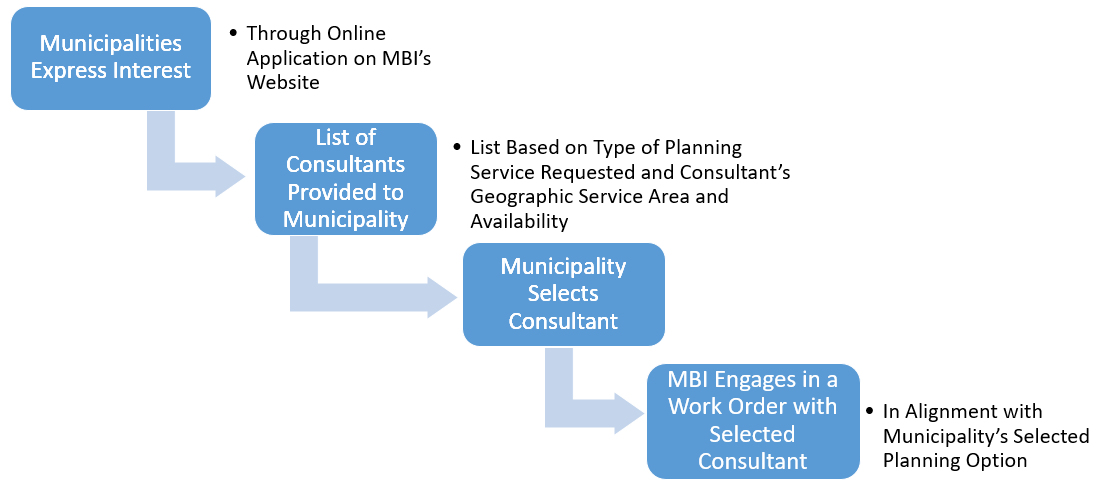
Municipalities were able to apply to this digital equity planning opportunity through April 25, 2025. MBI reviewed applications on a rolling basis to ensure that all required eligibility criteria were met. Upon review and approval for participation in the Municipal Digital Equity Planning Program, MBI provided a list of prequalified consultants that could serve the applicant's needs. The municipal applicant then selected a consultant. MBI then executed a work order with the consultant to provide the planning services and the consultant and municipality engaged in the work. The full cost of the consultant's services is covered by MBI under this program.
Flow chart explanation of Municipal Digital Equity Planning Application Process
MBI evaluated applications for the presence of impacted (300% poverty) or disproportionately impacted (185%) populations, as defined under U.S. Treasury Guidance related to ARPA SLFR Funds. Communities that demonstrated the presence of these populations were considered eligible to participate in the Digital Equity Planning Program.
A list of questions and answers have been collected and made public as a helpful resource.
What to Expect
The Digital Equity Charrette option was a low barrier to entry option to support municipalities with limited staff capacity and existing knowledge or activities related to digital equity. As part of the Digital Equity Charrette, consultants organized and facilitated an intensive workshop engaging municipal officials, community groups and other stakeholders to gather information on the needs of residents and the digital equity issues facing the municipality and focusing on the populations most impacted by the COVID-19 pandemic. With guidance from the municipality’s chosen consultant, digital equity stakeholders worked together to identify priorities, challenges, and solutions addressing the digital equity divide in the municipality
At the end of the charrette, the municipality received a summary report deliverable with strategic recommendations to begin, modify, or expanded digital equity programs/investments and a detailed, realistic vision for action.
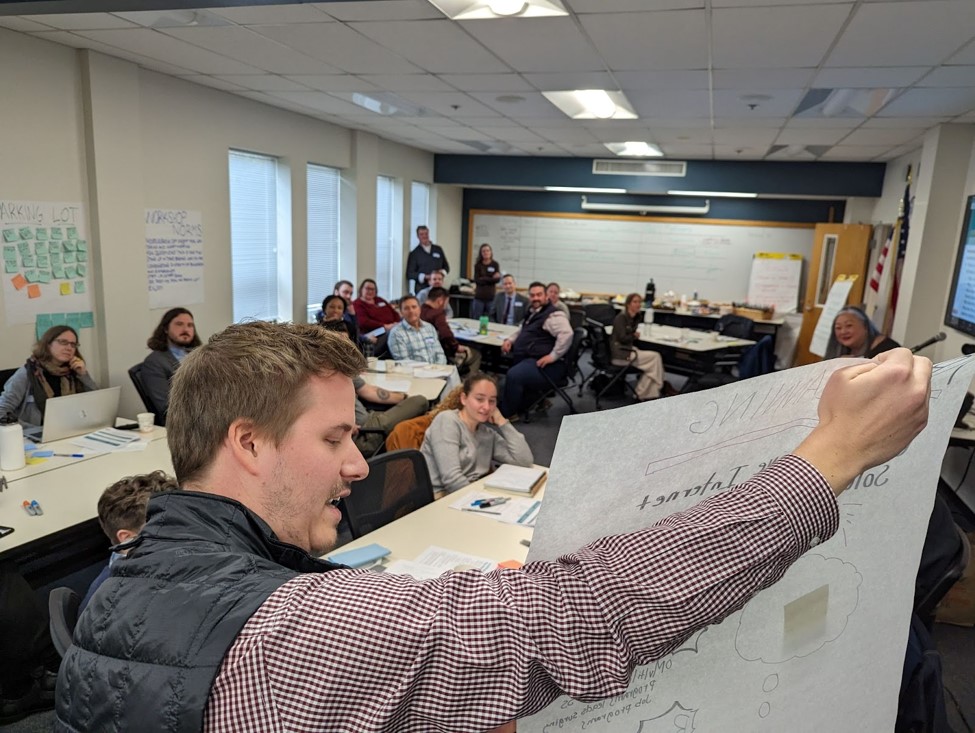
The Digital Equity Planning option is designed to provide municipalities an opportunity to execute a full comprehensive planning exercise. For the Digital Equity Planning option, consultants provide expanded data collection and dive into deeper conversations and engagement with digital equity stakeholders.
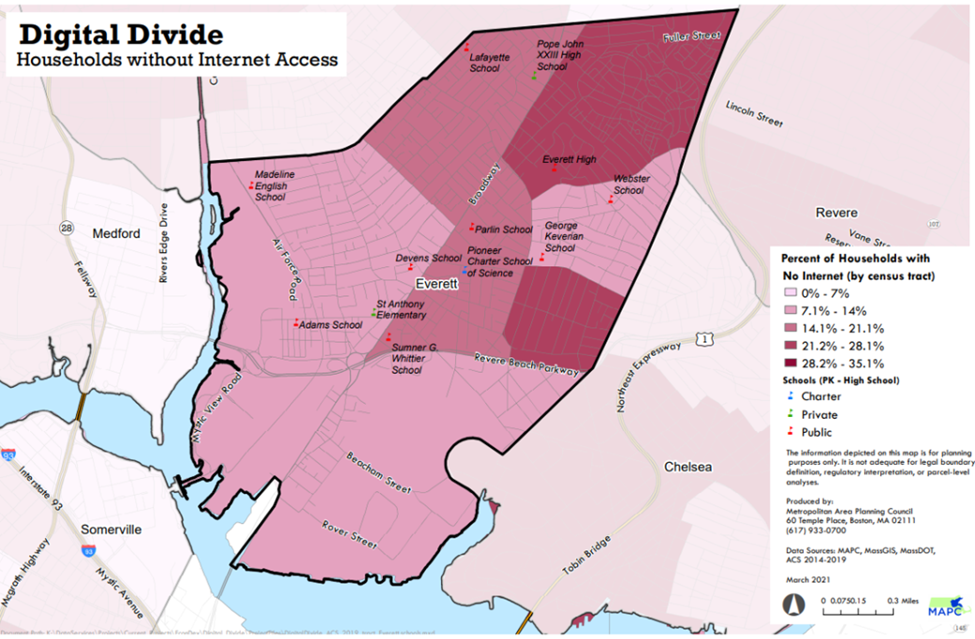
Through the Digital Equity Planning process consultants conducted a comprehensive existing conditions analysis providing a baseline overview of digital access and equity gaps affecting the municipality’s populations - including levels of broadband subscription, aggregate speed data, available services and pricing options, and device access/usage.
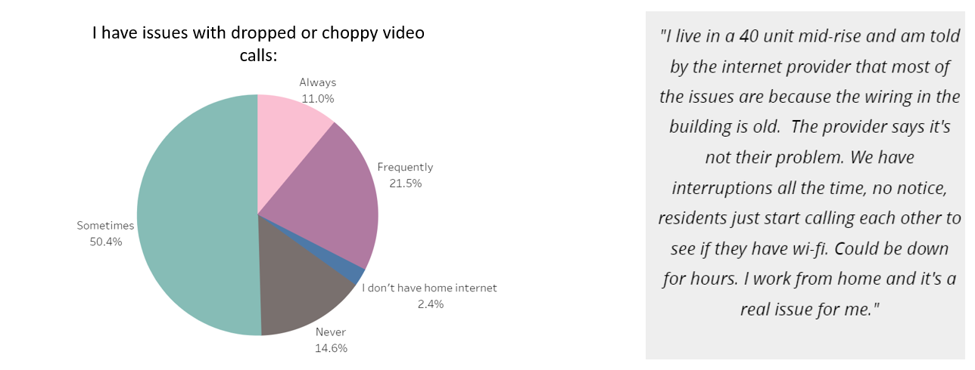
In coordination with municipal partners, consultants also engaged in an expanded community/stakeholder engagement process to collect a more nuanced and localized layer of data onto the existing conditions analysis to inform community specific needs related to digital literacy, devices, connectivity, affordability, and other issues related to digital equity.
A suite of strategic recommendations that meet the needs and goals of residents experiencing the impacts of the digital divide was delivered for consideration and adoption by the municipality. These recommendations included an assessment of existing or future funding opportunities available through sources that include the American Rescue Plan Act (“ARPA”) and Infrastructure Investment and Jobs Act (“IIJA”).
Municipalities received a cohesive and comprehensive final deliverable in report format at the end of the planning process.
See a sample Digital Equity Plan here.
Integration of Digital Equity Plans with Other State Plans and Programs
The Municipal Digital Equity Planning program was designed to integrate with the Massachusetts Statewide Digital Equity Plan. Under the Bipartisan Infrastructure Law, the U.S. Congress allocated $1.45 billion to the Digital Equity Act (DEA) to support states to develop and implement digital equity strategies and initiatives. Massachusetts has created a statewide digital equity plan that provides the vision, goals, and implementation strategy for future investments.
The Massachusetts Digital Equity Partnerships Program has designated nine Partners as qualified organizations that can implement a suite of digital equity projects that meet the goals outlined in the state’s legislation.
Partners work with organizations including municipal agencies, community development corporations (CDCs), community-based organizations (CBOs), public housing authorities, community colleges, local and regional school districts, healthcare and telehealth organizations (including federally qualified community health centers), and other entities as sub-awardees to implement digital equity projects.
MBI has identified six program areas that align with the legislative goals of the Broadband Innovation Fund and meet federal requirements established by the US Treasury for the use of Coronavirus State and Local Fiscal Recovery Funds (SLRF).
To the extent that municipalities identify local strategies that align with the program areas under the Digital Equity Partnerships program MBI will work to facilitate connection points between active Digital Equity Partners and municipalities engaging in the Digital Equity Planning program.
The Municipal Digital Equity Implementation Program enabled municipalities who need funding to mobilize, start-up, and implement digital equity activities locally to access a one-time grant up to $100,000 per municipality to execute a project (or projects) defined in their Digital Equity Plan, Digital Equity Planning Charette, or pre-existing local digital equity plan or related document that MBI deems of sufficient standard. Project implementation increases access and usage of the internet for the populations most impacted by the COVID-19 pandemic and the digital divide.
Municipalities were strongly encouraged to utilize their planning consultants from the Municipal Digital Equity Planning Program to define a project (or set of projects) scope and budget for implementation. Upon approval from MBI, municipalities started project implementation and were accountable to MBI’s reporting requirements, which vary by proposed focus area(s).
Consultant Prequalification Process
Interested organizations applied to become prequalified consultants by following the instructions outlined in the Municipal Planning Consultant Request for Qualification (RFQ). Consultants were pre-qualified on a rolling basis until MBI deemed it had sufficient capacity to fully execute the Municipal Digital Equity Planning Program.
List of Prequalified Consultants
Public Records
As a public entity, MassTech is subject to the Massachusetts Public Records Law (set forth at Mass. Gen. Laws ch. 66) and thus all information, documents and other materials made or received by MassTech and/or its employees are subject to public disclosure. Participants should not submit any information to MassTech that it does not want publicly disclosed, and should assume that all submissions are subject to public disclosure without any prior notice.
Contact Us
For questions or additional information about the Municipal Digital Equity Planning Program and/or Digital Equity Partnerships Program, please contact us at broadband@masstech.org.